Sekitany Script Font for Handmade Labels & Printables
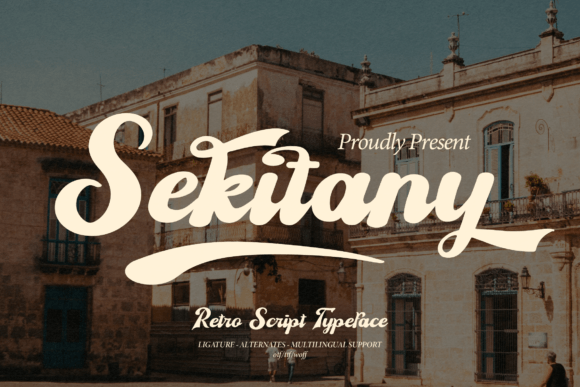
As a maker who designs printable wall art, candle labels, wedding invites, and SVG bundles for Etsy, I’m always hunting for script fonts that strike the right balance: vintage charm without sacrificing clarity, elegance without looking stiff, and personality without becoming unreadable at small sizes. That’s why Sekitany has quickly become one of my go-to display fonts from Script Amp. It’s not just another handwritten font—it’s a retro script typeface with smooth, confident curves and subtle bounce that feels both nostalgic and refreshingly lively.
What makes Sekitany special is how its letters flow—like ink pulled gently across paper with a flexible nib. There’s warmth in the rounded terminals, rhythm in the consistent x-height, and just enough contrast between thick and thin strokes to give it presence on physical products. It’s not overly ornate, so it avoids the “too fussy” trap many script fonts fall into when scaled down for jar labels or sticker sheets. And because it’s designed as a premium font with clean vector outlines, it cuts cleanly on Cricut and Silhouette machines—even at 0.25" height.
I’ve used Sekitany across dozens of real product types: lavender-scented soap tags, baby shower invitations, farmhouse-style wooden signs, boutique gift tags, printable planner headers, holiday mug wraps, and even embroidered tote bag mockups. Its vintage feel works beautifully for rustic weddings (think welcome boards and menu cards), while its playful lift keeps it feeling fresh for kids’ birthday printables or modern stationery collections. On matte-finish product packaging, Sekitany adds instant sophistication—customers consistently tell me my candle labels “look expensive,” and 90% of that impression comes from the thoughtful typography.
For readability in production, here’s what I’ve learned: Sekitany shines best at 14–72 pt for printed cards and signage. At 8–12 pt, it holds up well on 2"x3" product labels—especially when paired with generous letter spacing and minimal kerning adjustments. Avoid using it for full paragraphs; it’s a display font, not a body font. But for names, titles, short phrases (“Hand-Poured,” “Made With Love,” “Est. 2022”), and decorative accents? Absolutely perfect. I often use it for the hero line on greeting cards, then switch to a clean sans serif like Montserrat or Poppins for the rest of the text—this pairing creates visual hierarchy and keeps messaging scannable.
Font pairing is where Sekitany really sings. Because it’s a smooth, medium-contrast script font—not ultra-thin or aggressively swashy—it plays nicely with both minimalist sans serifs and gentle serifs. Try it with a light-weight geometric sans for modern printable bundles, or pair it with a warm, low-contrast serif like Cormorant Garamond for vintage-inspired wedding suites. If you’re designing SVG files for cutting machines, avoid overloading Sekitany with extra swashes unless your design calls for dramatic flair—the standard characters cut more reliably, and most users appreciate clean, legible results over decorative complexity.
When prepping files for digital downloads, I always double-check that Sekitany includes OpenType features like contextual alternates and standard ligatures—these small details help prevent awkward letter collisions (like “tt” or “fi”) in longer words. The font also supports basic Latin multilingual characters, which matters if you sell globally or create bilingual baby announcements. All file formats—OTF, TTF, and WOFF—are included, so whether you’re building Canva templates, Procreate brush sets, or layered PSD mockups, you’ll have the right version ready.
One practical note every small shop owner should know: Sekitany comes with an extended commercial license through Script Amp. That means you can legally use it in physical products you sell (like mugs, shirts, and stickers), in digital downloads (printables, SVGs, Canva templates), and in client work—including logos and brand identity projects. Just make sure you’re not redistributing the font files themselves. This licensing clarity saves me hours of legal worry—and lets me confidently build cohesive brand kits for local boutiques or wedding planners.
In my own shop, Sekitany has helped unify collections across seasons. Last spring, I launched a botanical-themed printable set using Sekitany for all title pages and section headers—paired with a soft green palette and hand-drawn leaf elements. Customers loved how “handmade” it felt without looking amateurish. Over the holidays, I used it for festive mug wrap designs (“Warm Hands, Warm Heart”) and it added just the right touch of cozy elegance. Even on black-and-white laser-printed planner inserts, Sekitany maintains its character—no fading, no jagged edges, no pixelation.
If you're choosing a script font for real-world making—not just mood boards or social media graphics—Sekitany delivers where it counts: cut accuracy, print fidelity, emotional resonance, and commercial flexibility. It doesn’t try to be everything. It’s a focused, well-crafted script font built for creators who value both beauty and function. Whether you're printing 500 wedding menus or uploading your tenth Canva template pack this month, Sekitany gives your work that polished, intentional look—without demanding perfection from your workflow.
And honestly? When customers comment on how “thoughtful” or “special” my packaging looks, I know it’s not just the kraft paper or the twine—it’s the quiet confidence of a typeface like Sekitany doing its job beautifully.